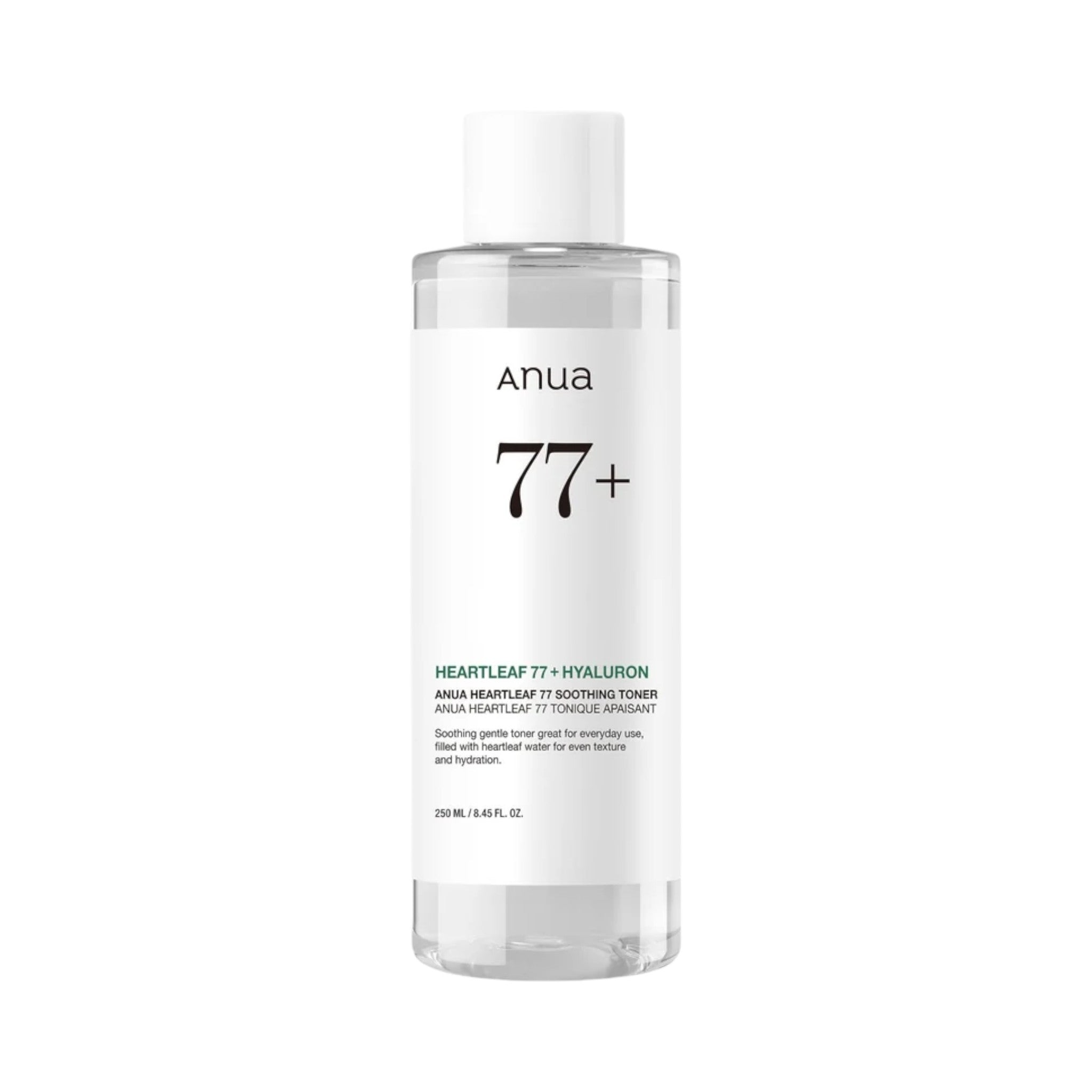

Caring for sensitive skin can sometimes be a real challenge: a new face cream may cause stinging, your face may turn red, or your skin may become drier and feel tighter than usual. That’s why it’s especially important to choose a moisturizer for sensitive skin that helps maintain the skin’s moisture levels and supports the function of its natural protective barrier.
But which ingredients should you look for on the product label? Could ceramides, panthenol, or Centella asiatica be good choices? And what should you avoid if your skin reacts easily to new cosmetics?
In this article, we’ll show you how to choose a moisturizer for sensitive skin, which ingredients may be especially helpful, and how to build a simple, gentle Korean skincare routine.
What does sensitive skin mean?
Sensitive skin generally reacts more strongly to certain external or internal factors. In these cases, products or environmental factors that other people’s skin tolerates without issue can also cause unpleasant symptoms.
Sensitivity isn’t necessarily a distinct skin type: it can affect dry, oily, and combination skin. It can also be a persistent trait or develop temporarily, for example, due to exfoliating too often, harsh cleansing, or an unsuitable skincare routine.
The most common signs of sensitive skin are:
- redness;
- stinging, burning, or tingling;
- tightness and dryness;
- flaking;
- itching;
- an unpleasant reaction to using new cosmetics.
It’s important to note that these symptoms aren’t exclusive to sensitive skin. Persistent or severe symptoms may be caused by eczema, rosacea, or another skin condition, for example, so it’s worth seeing a dermatologist in such cases.
Why is the right moisturizer important for sensitive skin?
The skin’s outer protective layer, or skin barrier, helps retain moisture and protect against external environmental factors. When this barrier isn’t functioning properly, the skin can lose water more easily, become drier, and react more strongly to certain ingredients.
A well-chosen moisturizer can help in several ways:
- supports skin hydration;
- may reduce dryness and tightness;
- may contribute to the proper functioning of the skin barrier;
- may help maintain skin comfort;
- can make the skin’s surface soft and supple.
For sensitive skin, a cream with the most active ingredients isn’t necessarily the best choice. Often, a simpler, well-tolerated formula is more effective than a product that combines numerous active ingredients.
If you’d like to better understand why the skin’s natural protective barrier is so important, read our guide to how the skin barrier works and how to restore it.
What ingredients should you look for in a moisturizer for sensitive skin?
When choosing a suitable moisturizer, consider the entire ingredient list. The presence of a single ingredient doesn’t guarantee that a product will suit everyone with sensitive skin. However, the following active ingredients and ingredient groups can be a good starting point.
1. Panthenol - to support skin comfort
Panthenol, also known as provitamin B5, is a common ingredient in moisturizing and soothing cosmetics. It can help maintain skin hydration and improve comfort for dry, tight-feeling skin. This makes it especially worth considering for sensitive, dry, or stressed skin. If your face often feels tight after cleansing, consider looking for a moisturizer that contains panthenol.
2. Ceramides - to support the skin barrier
Ceramides are important components of the skin’s natural lipids. They play a key role in building the skin barrier and retaining moisture. Moisturizers containing ceramides can be especially useful if your skin is dry, tight, or has become sensitive from over-exfoliation. Consider choosing a formula that combines ceramides with other moisturizing ingredients, such as glycerin or panthenol.
3. Glycerin - for everyday hydration
Glycerin is one of the best-known humectants, or water-binding ingredients. It helps the skin retain water and is found in many moisturizing products. It can be a good choice for sensitive skin because it’s a simple, familiar moisturizing ingredient that can be used in many types of formulas. Glycerin alone won’t solve every skin problem, but it can be an important component of a well-formulated moisturizer.
4. Hyaluronic acid - for maintaining hydration
Hyaluronic acid helps bind water, which is why it’s often used in hydrating serums, toners, and face creams. It can also be useful for sensitive skin, especially when dryness or dehydration is present. However, the entire formula matters: fragrances and other ingredients can also cause problems for skin prone to sensitivity. Consider pairing a hyaluronic acid serum with a moisturizer if your skin needs to retain moisture as well as bind water.
To learn more about this ingredient, read our guide to the effects and uses of hyaluronic acid.
5. Centella asiatica - a popular Korean skin care ingredient
Centella asiatica, known in Hungarian as ázsiai gázló, is a well-known plant-based ingredient in Korean cosmetics. Its various extracts are often used in formulas designed to soothe the skin and support skin comfort. That’s why it’s also found in many Korean products developed for sensitive skin.
However, plant-based origin alone doesn’t mean an ingredient will be non-irritating for everyone. If your skin has reacted to plant extracts before, introduce products containing centella with care as well.
6. Squalane - for softer skin
Squalane is an emollient ingredient that can help reduce dry, rough skin and support moisture retention. It may be especially worth considering for dry or dehydrated, sensitive skin if lightweight moisturizers alone don’t provide enough comfort. Squalane can be used in many types of skincare formulas, but it’s still worth considering the full ingredient list and how your own skin reacts.
7. Beta-glucan - in moisturizing and skincare formulas
Beta-glucan is an ingredient also used in products designed to moisturize and soothe the skin. It can be a good fit for a routine that aims to support skin hydration and comfort. You may also find it combined with ceramides, glycerin, or panthenol.
8. Colloidal oatmeal and other emollient ingredients
Colloidal oatmeal is used in some products for sensitive, dry skin to improve skin comfort. Other emollient ingredients, such as certain plant oils or butters, can also help reduce the feeling of dryness.
If you have a known allergy to any plant-based ingredient, always check the product’s ingredients.
Which ingredients should you avoid if you have sensitive skin?
There is no universal list of ingredients to avoid for all sensitive skin. The same ingredient may cause no problems for one person, but trigger irritation or an allergic reaction in another. However, it’s worth being cautious with certain ingredients and types of products.
Fragrances and essential oils
If your skin reddens easily or reacts to new cosmetics with a stinging sensation, it may be worth trying fragrance- and essential oil-free products first. Fragrances don’t cause problems for everyone, but they can increase the risk of irritation or contact allergies in skin prone to sensitivity.
The label “fragrance-free” can be a useful guide, but it’s still important to check the full ingredient list.
Strong exfoliants and too many active ingredients
Actives such as glycolic acid, salicylic acid, and other exfoliating ingredients can be useful in some routines, but using them too often or incorrectly can lead to irritation. If your skin is currently red, burning, or peeling, don’t try to fix the problem with another active product. First, simplify your routine and focus on gentle cleansing and moisturizing.
Alcohol-based, highly drying formulas
Not all alcohols are the same: some fatty alcohols, such as cetyl alcohol, can also act as emollients in cosmetics. So it’s not a good idea to automatically avoid every product that contains alcohol. However, if you regularly experience stinging or increased dryness when using a product, it may be worth choosing a different formula.
How do you choose a moisturizer for sensitive skin?
Along with the ingredients, the texture, simplicity of the formula, and your skin’s current condition all matter.
If your skin is dry and sensitive
Look for a cream that may contain ceramides or other emollient lipids alongside hydrating ingredients. A creamier, more nourishing texture may feel more comfortable than a very lightweight gel.
If your skin is oily but sensitive
Choose a lightweight, well-tolerated formula that doesn’t feel uncomfortably heavy. You don’t need to give up on hydration: oily skin can also be dehydrated.
If your skin often gets red
It’s worth starting with a simple, fragrance-free formula and avoiding introducing new products at the same time. If the redness persists, comes with a burning sensation, or gets worse, seek advice from a dermatologist.
If you’re not sure which product is right for you
Don’t decide based solely on skin type labels or popularity. Check the ingredients list, choose a texture that suits your skin’s needs, and introduce new products gradually.
Korean skincare routine for sensitive skin
Layering hydrating products is common in Korean skincare, but a long routine isn’t necessary for sensitive skin.
Quite the opposite: a short, well-tolerated routine can be a great starting point.
Morning routine
- Gentle cleansing, or a simple rinse with water if needed.
- Optional fragrance-free hydrating toner.
- Moisturizer.
- Broad-spectrum sunscreen with at least SPF 30 that your skin tolerates well.
Evening routine
- Makeup remover or cleanser suitable for removing sunscreen, if needed.
- Gentle facial cleanser.
- Simple moisturizer.
If your skin is calm and you feel it needs one, you can add a hydrating serum later. However, you don’t need to use every step for your routine to be effective.
If you’d like to learn how to build a complete routine, take a look at our step-by-step guide to a Korean skincare routine.
How should you introduce a new moisturizer if you have sensitive skin?
If you have sensitive skin, it’s especially helpful not to change several products at once.
Try the new moisturizer on a small area first and observe how your skin reacts. Professional recommendations suggest applying the product to a small area of skin repeatedly over several days, following the directions, before using it at home. However, this doesn’t guarantee that you won’t develop a reaction later.
Keep the following in mind:
- introduce only one new product at a time;
- follow the directions for use on the packaging;
- stop using it if it clearly makes the irritation worse;
Seek medical attention if you experience severe swelling, hives, significant burning, or persistent symptoms.
If you’ve had an allergic reaction to a cosmetic product before, or your skin is often inflamed, it’s worth consulting a dermatologist about choosing the right product.
5 common mistakes when caring for sensitive skin
1. You’re trying several new products at once.
If your skin reacts, it will be difficult to determine which product caused the problem.
2. You assume natural ingredients are automatically safe.
Plant extracts and essential oils can also cause irritation or an allergic reaction.
3. You use too many active ingredients.
Exfoliants and other active ingredients aren't necessarily needed at every step of your daily routine.
4. You skip moisturizing altogether because you're afraid of irritation.
The right moisturizer can help support the skin barrier and improve skin comfort.
5. You ignore persistent symptoms.
If your skin regularly burns, itches, becomes very red, or flakes, don't try to solve every problem with another skincare product.
Frequently asked questions
What's the best moisturizer for sensitive skin?
There isn't one best product for everyone. Look for a moisturizer that suits your skin's condition, is well tolerated, and contains moisturizing and barrier-supporting ingredients as needed. For sensitive skin, a fragrance-free formula can be a good starting point.
Is panthenol good for sensitive skin?
Panthenol is often used in products designed to moisturize and soothe the skin. It may help improve skin comfort, but individual tolerance and the overall formula matter here, too.
Can I use a cream with centella on sensitive skin?
Yes, centella asiatica is found in many Korean skincare products formulated for sensitive skin. However, individual reactions to plant extracts are also possible, so it's worth introducing the product gradually.
Do I need sunscreen for sensitive skin?
Daily sun protection is important for sensitive skin, too. Choose a broad-spectrum sunscreen that you tolerate well, and use it according to the instructions. If several products irritate your skin, a dermatologist can help you find a suitable alternative.
What should I do if my moisturizer stings?
It's not possible to determine the cause of a mild, brief sensation based on this alone, but if the product repeatedly stings, burns, or increases redness, stop using it. If symptoms persist or are severe, consult a dermatologist.
Summary: how to choose a moisturizer for sensitive skin
With sensitive skin, the most important thing isn't using as many active ingredients as possible, but finding a well-tolerated formula that's right for your skin.
When choosing, it's worth looking for the following:
- panthenol and glycerin to support hydration;
- ceramides to support the skin barrier;
- hyaluronic acid to help retain moisture;
- centella asiatica or beta-glucan in skincare formulas;
- fragrance-free, simple formula if your skin reacts easily.
Introduce new products gradually, and remember: when caring for sensitive skin, consistency and gentleness often matter more than a complicated routine.
If you're looking for a new moisturizer, check out K-Beauty For You's selection of Korean moisturizing creams and choose a product that suits your skin's current needs.