

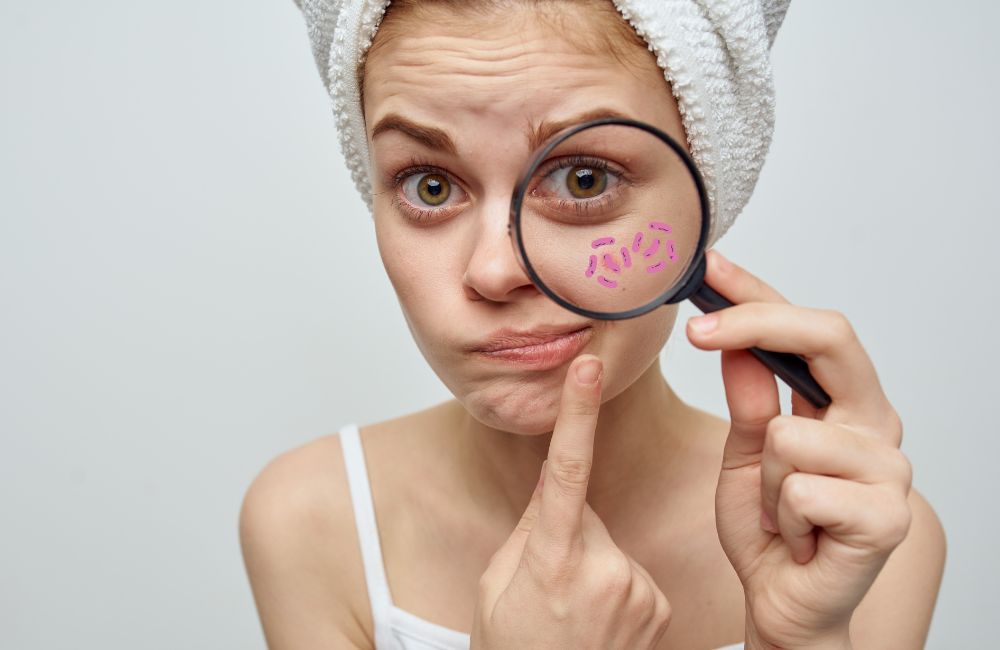
Have you heard about probiotics and the importance of gut flora? But what if we told you that a similarly complex world, the skin microbiome, exists on the surface of your skin and deserves just as much care? This bustling, invisible ecosystem is responsible for your skin’s health and defense.
Yes, you heard right! This is the skin microbiome, one of the most exciting new areas in skincare. Don’t worry, you don’t need a biology degree to understand it! We’ll explain simply why your skin will thank you if you start caring for this invisible protective shield.
The secret of the skin microbiome: your invisible protective shield
Imagine your skin as a thriving, vibrant garden. In this garden, millions of microorganisms – bacteria, fungi, viruses – live in perfect harmony. Together, they make up the skin microbiome.
When this "garden" is healthy, the "good" bacteria (the flowers) dominate and leave no room for the "bad" bacteria (the weeds). This balanced state is your skin’s first and most important line of defense.
🌟 A healthy skin microbiome:
- Protects against pathogens: It keeps out bacteria that cause acne.
- Strengthens the skin barrier: Helps retain moisture.
- Maintains optimal pH levels: Prevents dryness and irritation.
- Reduces inflammation: Soothes the skin and decreases redness.
However, if this balance is disrupted (e.g., by harsh, drying cleansers, stress, or environmental damage), the "weeds" can overgrow, leading to problems like acne, eczema, rosacea, or extreme sensitivity.
🌟 How to nourish your skin microbiome balance: Pro-, Pre-, and Postbiotics
In cosmetics, you’ll encounter microbiome-supporting ingredients in three ways. Don’t be intimidated by the names; it’s really simple!
- PRObiotics: The beneficial bacteria themselves. In cosmetics, they are usually present in inactive forms (lysates, fermented extracts) but still communicate wonderfully with the skin. They are the flowers planted in the garden.
- PREbiotics: The favorite food of good bacteria (e.g., sugars, fibers). They help existing good bacteria multiply and become stronger. They are the fertilizer for the flowers.
- POSTbiotics: Useful byproducts produced by probiotics (e.g., enzymes, peptides, lactic acid). Ready-made goodness that immediately strengthens the skin. They are the nectar produced by the flowers.
🌟 Benefits of a balanced skin microbiome
Think of microbiome-conscious skincare as the gardener for your skin. It helps care for, nourish, and protect your little ecosystem so it can flourish in its best form.
- Soothes irritated, sensitive skin: Restores balance and reduces redness.
- Helps fight acne: Supports the skin’s defense against acne-causing bacteria.
- Strengthens damaged skin barrier: Reduces water loss, making skin more hydrated and resilient.
- Slows signs of aging: Balanced, hydrated skin maintains its elasticity longer.
❓ Frequently Asked Questions (FAQ)
1. Is skin microbiome health important for all skin types? Yes! While the most noticeable results appear on sensitive, problematic (acne-prone, rosacea) or damaged skin barriers, every skin type benefits. A balanced skin microbiome is the foundation of healthy skin for everyone.
2. Can I use it together with other active ingredients (e.g., vitamin C, retinol)? Absolutely! Microbiome-friendly ingredients are very "friendly." In fact, because they soothe and strengthen the barrier, they can help reduce irritation caused by stronger actives like retinol or exfoliating acids.
3. Can I apply probiotic yogurt to my face? Although tempting, it’s better not to! Probiotics in food and their pH are not optimized for skin. Cosmetic formulas are specifically developed to be safe, stable, and to deliver active ingredients effectively on the skin.
🔎 Where can you find microbiome-friendly cosmetics?
Ready to start caring for your skin’s secret garden? If you’re looking for a reliable place to choose from the best, innovative Korean cosmetics, check out the kbeautyforyou.hu online store!
