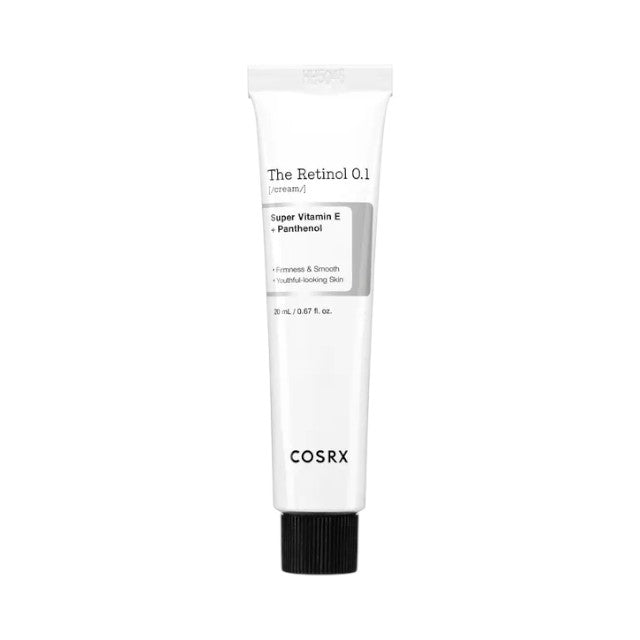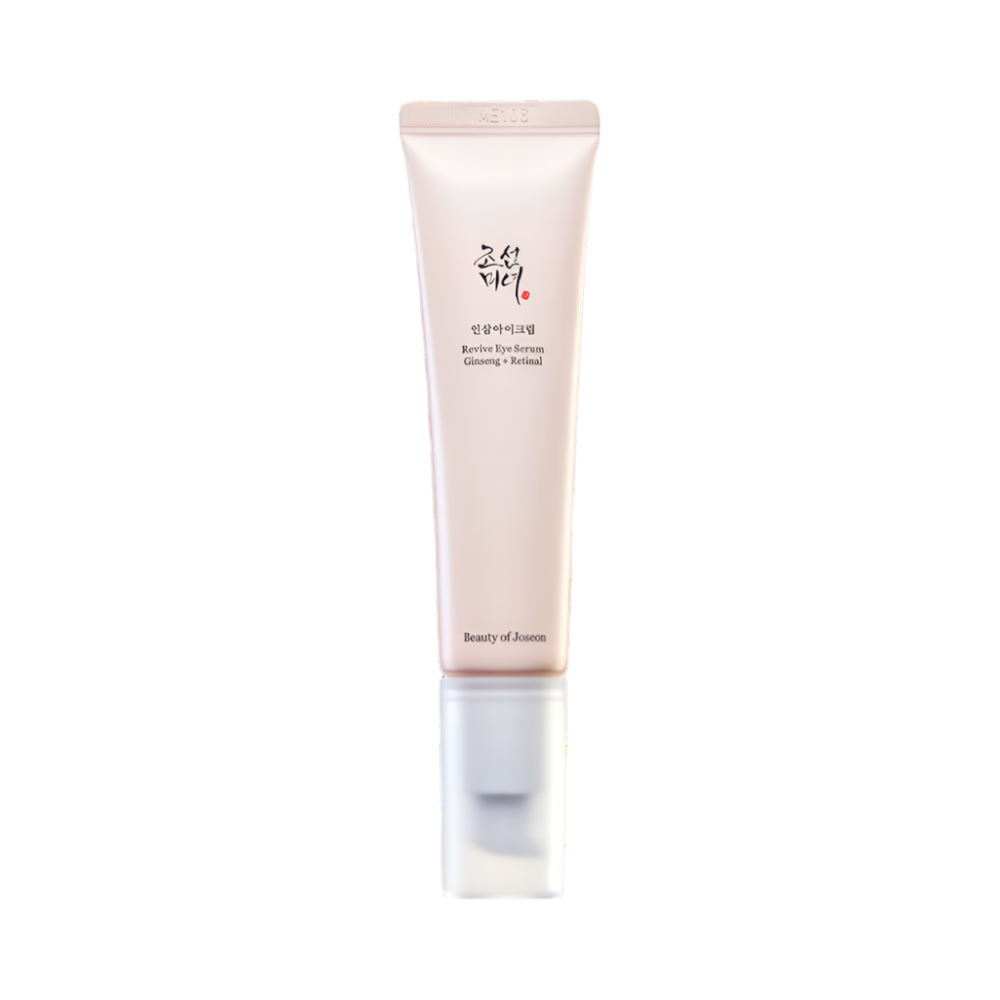
Retinol serum is one of the best-known active ingredients in anti-aging skincare, but as a beginner, it’s easy to start too quickly. The “the stronger, the more effective” approach, for example, can easily lead to uncomfortable dryness, peeling, or irritation.
The good news is that most of these problems can be prevented with a proper routine. If you’d now like to introduce retinol into your skincare routine, we’ll show you the 7 common mistakes worth avoiding.
If you’ve never used retinol at all, it’s also worth reading our detailed guide first: Retinol for beginners - how to incorporate it into your routine step by step
1️⃣Mistake: You start with a retinol serum that’s too strong
Perhaps this is the most common beginner mistake.
When you first look for a retinol serum, it’s easy to think that a product with a higher concentration will produce faster or more visible results.
With retinol, however, this isn’t necessarily the best strategy.
If your skin hasn’t encountered retinol before, it’s worth introducing the active ingredient gradually. A lower-concentration formula or one specifically designed for beginners can be a much better starting point.
What should you look for when buying?
Don’t just look at the number shown on the product.
It’s worth considering:
- the retinol concentration,
- the formula’s other ingredients,
- your skin’s current condition,
- whether you’ve used retinoids before,
- and how often you’d like to use it.
The goal isn’t to use the strongest retinol serum possible, but to find one that your skin tolerates well.
If you’d like to look through the products you can choose from: Retinol serums - K-Beauty For You
2️⃣Mistake: You use it too often right from the start
You have your new retinol serum, can’t wait to start using it, and immediately apply it every night?
Understandable. But it’s not necessarily a good idea.
When introducing retinol, gradual progression is one of the most important rules.
If you’re a beginner, you can start, for example, once or twice a week. If your skin tolerates it well, you can gradually increase how often you use it later.
There’s no need to rush.
With retinol, long-term, consistent use is much more important than reaching daily application within a few weeks.
Pay attention to your skin’s signals!
If you notice that:
- your skin feels tight,
- becomes very dry,
- peels,
- turns red,
- becomes sensitive,
in that case, it’s worth reducing how often you use them and focusing more on hydration.
3️⃣Mistake: You’re using too many active ingredients at once
“Retinol? Then let’s add a little AHA, BHA, vitamin C, an exfoliant, and another strong serum.”
Sound familiar?
In skincare, it is easy to fall into the habit of wanting to use every popular active ingredient at once.
Yet your skin will not become more beautiful just because it encounters as many active ingredients as possible in one evening.
It is especially worthwhile to simplify your routine while introducing retinol.
Beginner retinol routine
Evening:
- gentle cleanser,
- retinol serum,
- moisturizer.
This may be entirely sufficient.
Once your skin has developed tolerance, you can gradually reintroduce the other active ingredients in your routine.
If you are interested in detail about which active ingredients should be combined cautiously with retinol, you can find further guidance here:
Mistake 4: You do not moisturize properly
When introducing retinol, many people focus exclusively on the active ingredient itself.
Yet it is at least as important what you use alongside it.
In a retinol routine, adequate hydration can help keep the skin more comfortable and make it easier for the skin to adapt to the new active ingredient.
Which ingredients should you look for?
Hydrating and barrier-supporting ingredients can be especially beneficial, such as:
- ceramides,
- panthenol,
- hyaluronic acid,
- glycerin,
- centella asiatica,
- squalane.
A richer moisturizer can be especially useful if your skin feels drier while using retinol.
And one important tip:
You do not need to use five different serums every evening.
A well-chosen moisturizer often helps more than adding yet another active ingredient.
5️⃣Mistake: You apply retinol serum to damp skin
This is a frequently asked question about using retinol.
For beginners, it is generally more practical to wait until the skin has dried completely after cleansing, and only then apply the retinol serum.
This may be especially important if your skin is more sensitive or you are just starting to use retinol.
So, a simple evening routine would be:
facial cleansing → dry skin → retinol serum → moisturizer
If the manufacturer of the product you have chosen recommends a different method of use, always follow the product’s own instructions.
Mistake 6: You forget sunscreen
This is one of the most important points.
If you are incorporating retinol into your routine, it is especially important to pay attention to sun protection in the morning.
Retinol does not replace sunscreen, and an anti-aging routine cannot be complete without adequate UV protection.
Your morning routine could be, for example:
1. Facial cleansing
2. Hydrating serum
3. Moisturizer, if needed
4. SPF 50 sunscreen
Don’t use sunscreen only in summer. Daily UV protection is one of the most important parts of a skincare routine, especially if your goal is to reduce visible signs of skin aging and maintain a more even complexion.
Mistake 7: Expecting results too quickly
Retinol isn’t an active ingredient whose results you’ll see overnight.
This may be one of the most difficult parts of using it.
After a few uses, it’s easy to think:
“I can’t see anything; it must not be working.”
Yet in skincare, consistency is much more important than speed.
With retinol, it’s worth thinking long term while monitoring your skin’s condition.
You don’t need to buy a new product every week just because you haven’t seen the desired results yet.
Give your routine time.
+1 mistake: Assuming all irritation is a “normal part” of using retinol
This is also worth mentioning separately.
When introducing retinol, your skin may appear drier or more sensitive, especially at first.
But you don’t have to “tough out” severe, persistent irritation just because you use retinol.
If you experience significant:
- a burning sensation,
- severe redness,
- uncomfortable tightness,
- noticeable peeling
you experience, it’s worth taking a break, simplifying your routine, and focusing on moisturization.
If the symptoms persist or are severe, seek dermatological advice.
A good retinol routine isn’t the one that irritates your skin the most, but the one your skin tolerates well in the long term.
How should you introduce retinol serum as a beginner?
If you’d like to start now, a simple approach can make things much easier.
Step 1 - choose the right retinol serum
As a beginner, don’t look for the strongest product.
Step 2 - start 1-2 times a week
Pay attention to how your skin reacts.
Step 3 - moisturize
Use a simple, comfortable moisturizer.
Step 4 - gradually increase the frequency
Only increase the frequency if your skin tolerates it well.
Step 5 - always use sunscreen in the morning
SPF should be a consistent part of your morning routine.
What should you use alongside retinol serum?
You don’t need to overcomplicate your routine when you’re starting out.
In the morning
Gentle cleanser → hydrating serum → moisturizer → SPF 50
On retinol evenings
Gentle cleanser → retinol serum → moisturizer
On retinol-free evenings
Gentle cleanser → moisturizer/hydrating serum → cream
Once you’ve gotten used to retinol, you can incorporate more active ingredients later, but it’s best to proceed one at a time.
Retinol serum for beginners - the most important rules in one place
If you only remember a few things from this article, let these five be them:
1. Don’t start with the strongest retinol.
2. Don’t use it every evening at first.
3. Don't layer several strong active ingredients at once.
4. Pay attention to moisturizing and supporting the skin barrier.
5. Use adequate sun protection in the morning.
And one more, the sixth:
Be patient.
Retinol is not a sprint but a long-term routine.
Frequently asked questions about using retinol serum for beginners
How many times a week should I use retinol serum as a beginner?
As a beginner, it's best to start once or twice a week, then gradually increase the frequency depending on your skin's tolerance.
Can I use retinol every night?
Not necessarily. If your skin tolerates it well, you can increase the frequency later, but daily use is not a goal in itself.
Why is my skin peeling after using retinol?
Dryness and peeling may occur when introducing retinol. However, if the irritation is severe or persistent, reduce how often you use it and prioritize moisturization.
Should I use moisturizer after retinol?
Yes. A suitable moisturizer can make a retinol routine more comfortable, especially during the introductory period.
Can I use retinol on sensitive skin?
It can be introduced even if you have sensitive skin, but it is especially important to do so gradually. If your skin reacts strongly, reduce or pause use.
When should I use retinol serum?
Retinol serum is typically used in the evening. In the morning, it's especially important to pay attention to adequate sun protection.
How long does it take to see the effects of retinol?
The effects of retinol develop gradually, so it's worth using it consistently over a longer period. Don't evaluate the results of your entire routine after just a few applications.
Can I use AHA or BHA acids alongside retinol?
It's possible, but as a beginner, it's not advisable to use several strong active ingredients on the same evening. It may be best to use acid exfoliation and retinol on separate evenings.
Retinol serum for beginners: speed is not what matters
When introducing retinol, it's easy to make the mistake of wanting to see results as quickly as possible. In reality, the opposite approach may be more effective.
Choose the right formula, start slowly, pay attention to your skin's signals, moisturize regularly, and don't forget about sun protection.
Retinol serum can truly become part of your routine when you view it not as another “miracle product,” but as part of a long-term skincare routine.
Once you feel more confident using it, you can move on to the next steps: combining different active ingredients, creating a routine tailored to your skin type, and, of course, choosing the right retinol serum for you.
Explore K-Beauty For You's retinol serum range!