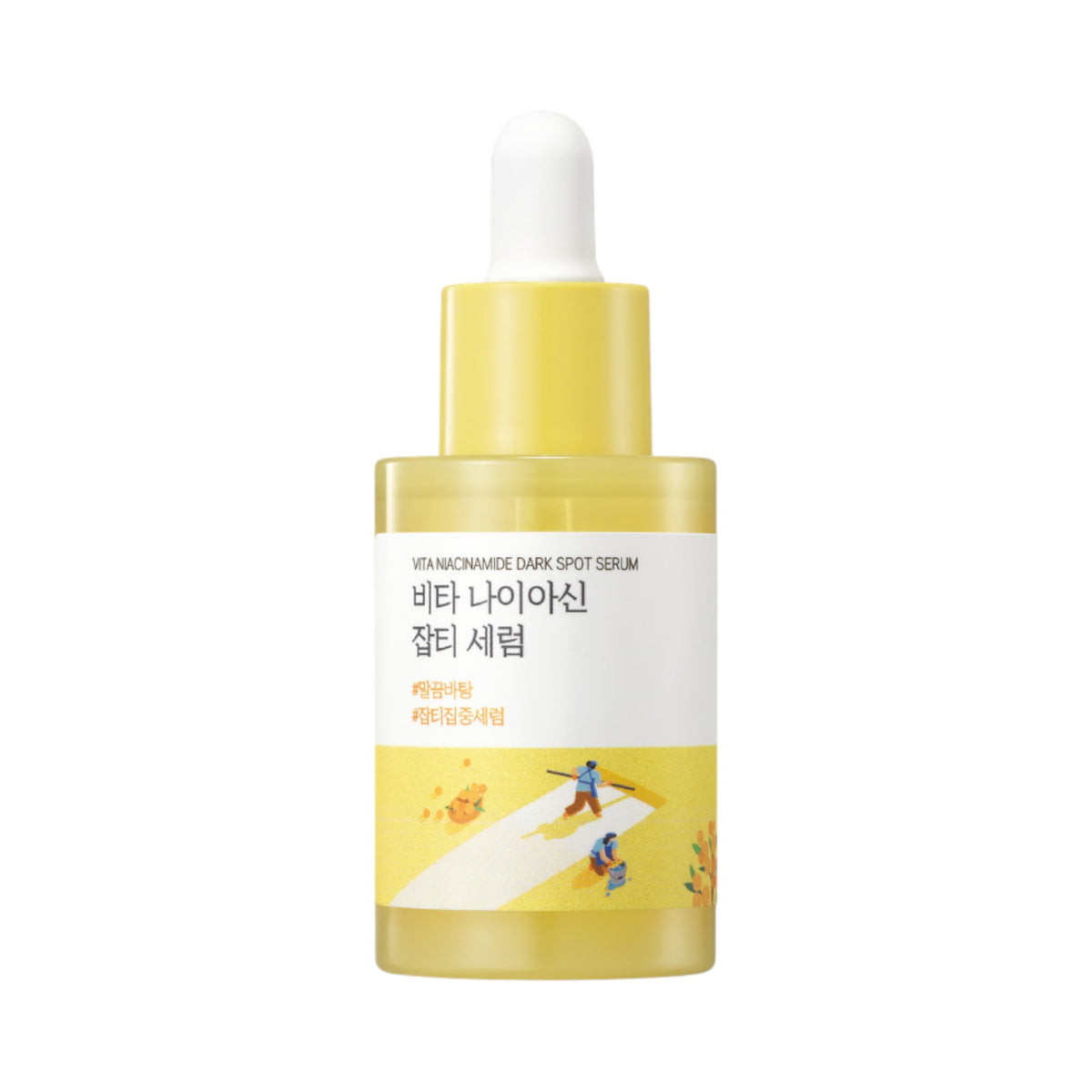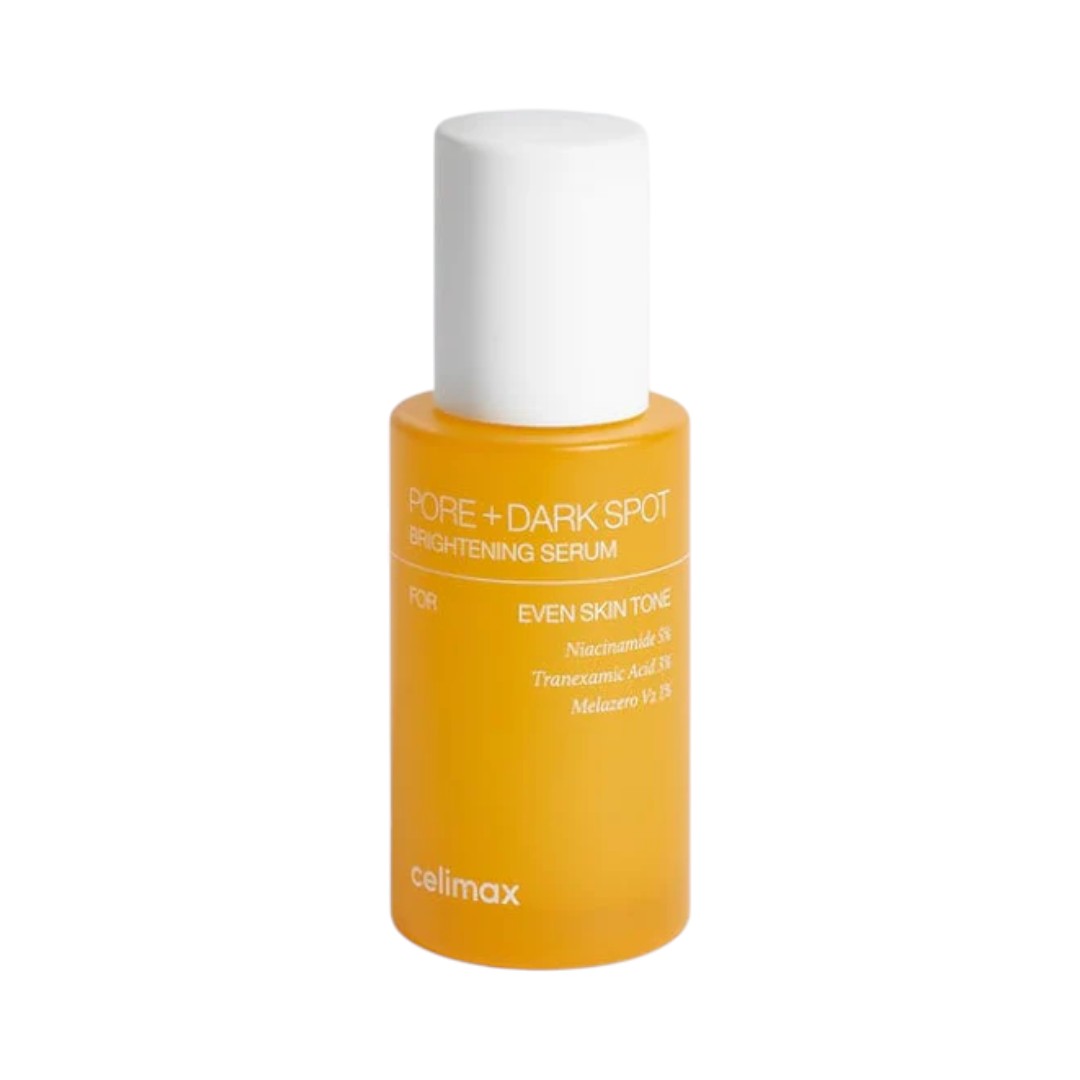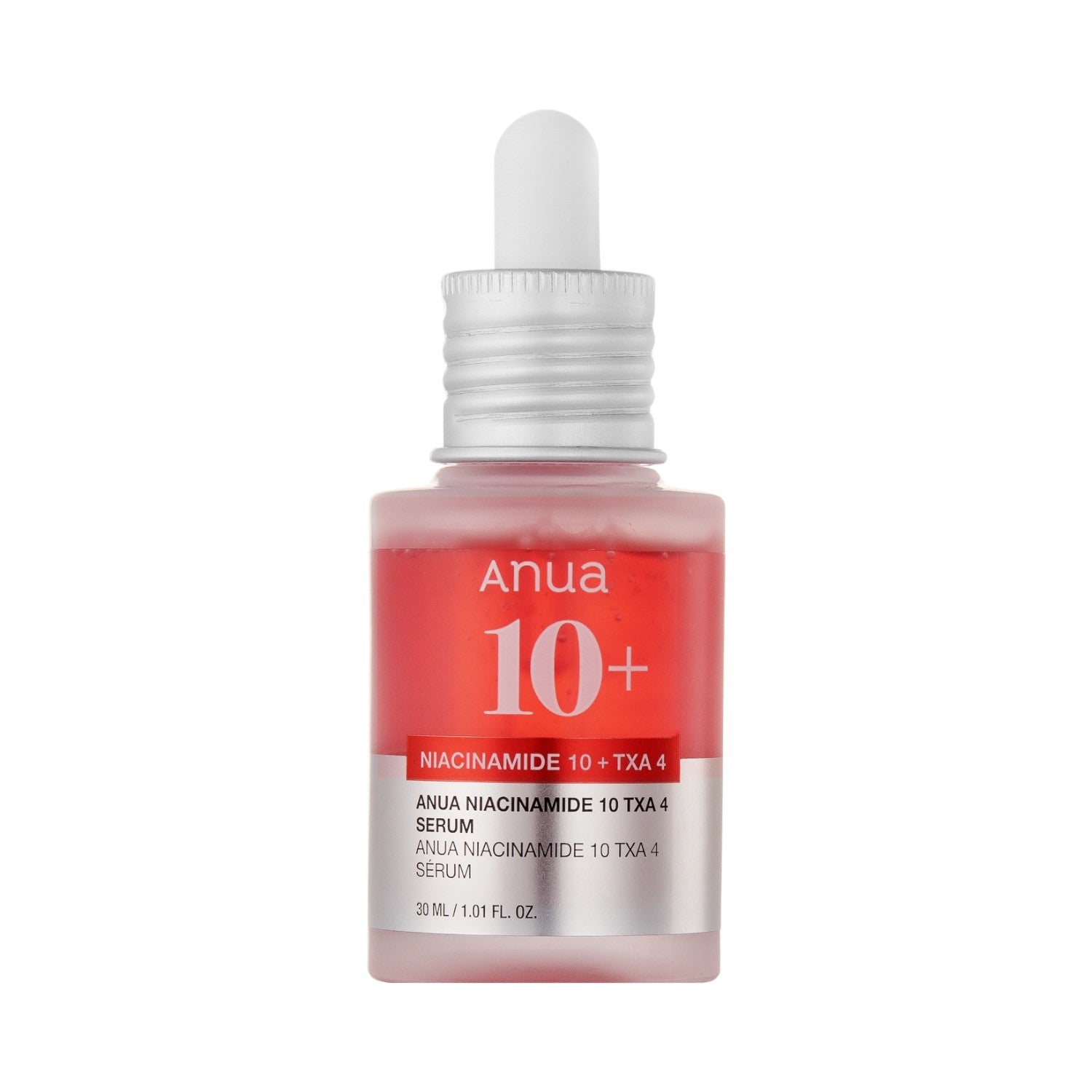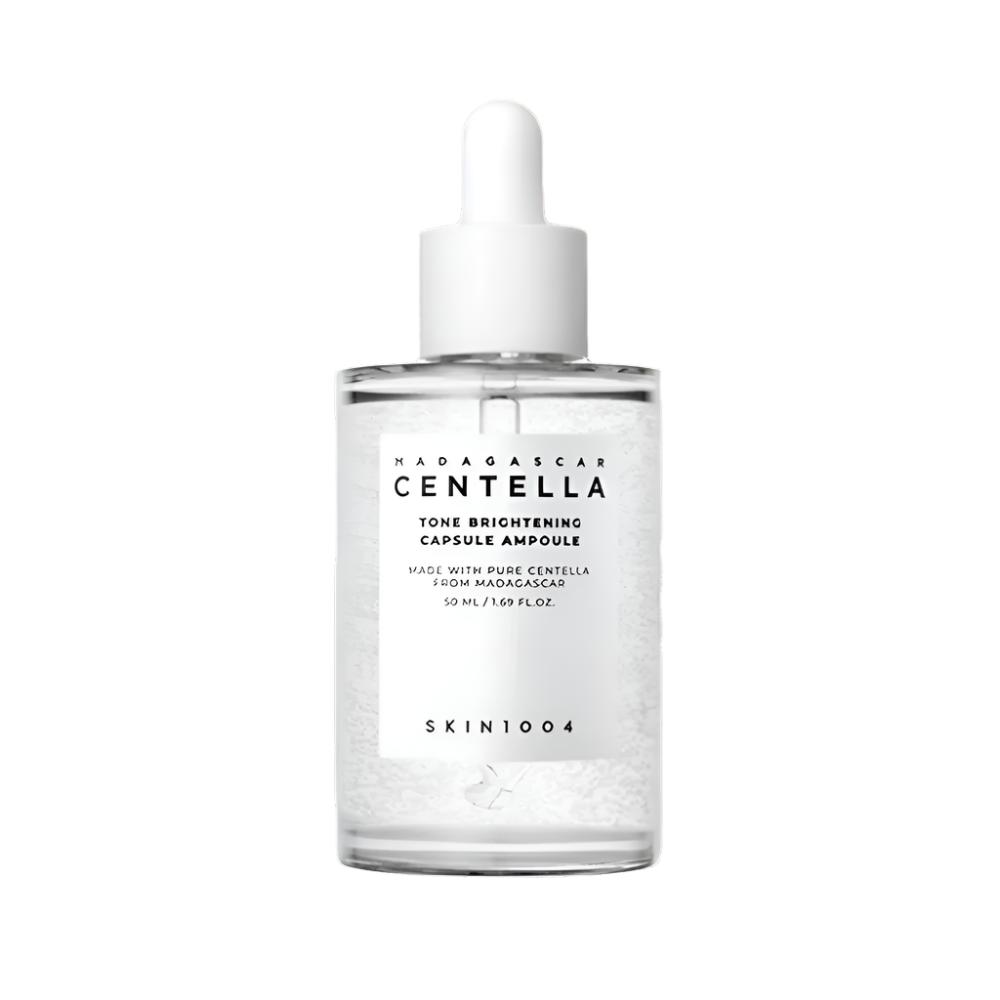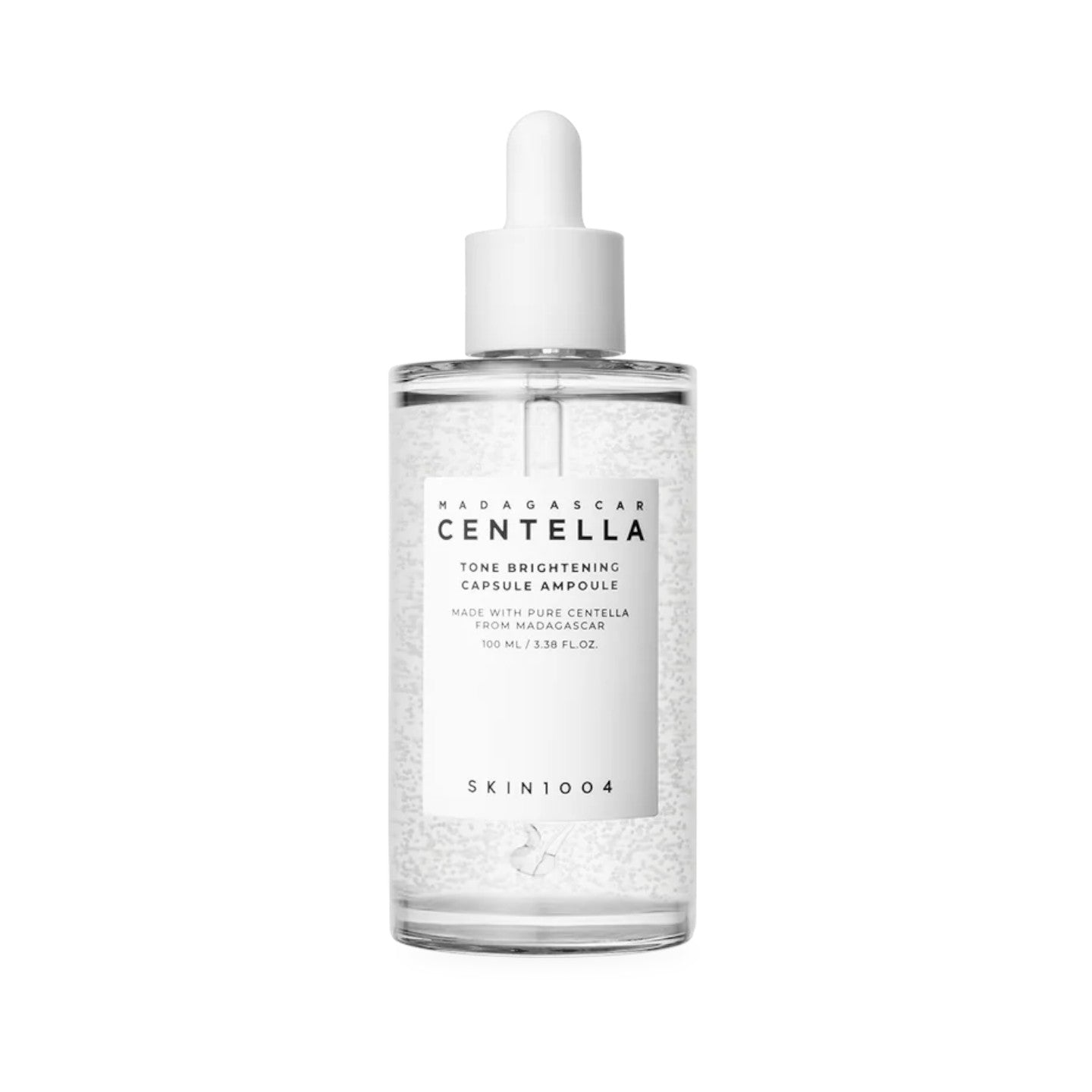

If you are looking for a targeted active ingredient for pigmentation spots, uneven skin tone, or a dull complexion, you have probably already come across tranexamic acid. In recent years, it has appeared in an increasing number of Korean cosmetics, primarily in formulas designed to even out skin tone and reduce the visibility of pigmentation.
But what exactly is tranexamic acid? How does it affect the skin, and how does it differ, for example, from vitamin C, niacinamide, or retinal?
The most important question is: could it really be a good choice for pigmentation spots?
In this article, we will go through these questions specifically from the perspective of Korean skincare.
What is tranexamic acid?
Tranexamic acid - called tranexamic acid in English and abbreviated as TXA - was not originally known as a cosmetic ingredient. It is an active pharmaceutical ingredient primarily used to control bleeding.
Dermatologists later became interested in it because they observed that it may also influence processes associated with pigmentation. It was studied particularly in connection with melasma, the characteristic pigmentation that often appears on the face.
The cosmetics industry now also offers topical, meaning skin-applied, tranexamic acid. These products are primarily found in serums, essences, ampoules, and creams.
What is tranexamic acid used for in skincare?
Tranexamic acid is primarily of interest in relation to pigmentation and uneven skin tone.
According to research, it may influence several processes associated with melanin production. One proposed mechanism of tranexamic acid is its effect on the plasminogen/plasmin system, which may also play a role in UV-induced pigmentation processes.
That is why you may encounter tranexamic acid primarily for the following purposes:
- reducing the appearance of pigmentation spots,
- improving uneven skin tone,
- supporting the radiance of dull skin,
- complementing treatments used for melasma,
- use in cases of post-inflammatory hyperpigmentation, or PIH.
However, it is important to distinguish between cosmetic skincare and the medical treatment of melasma.
A serum containing tranexamic acid is not the same as the medical treatment a dermatologist may recommend for melasma.
Tranexamic acid for pigmentation spots - how might it work?
The formation of pigmentation spots is a complex process. No single mechanism is responsible for certain areas of the skin becoming darker.
Tranexamic acid is interesting because it does not simply work as a “whitening” ingredient. According to research, it may affect several pathways involved in pigment production.
This has become a research focus particularly in the case of melasma.
At the same time, the evidence is not entirely consistent, and further high-quality studies are needed, particularly on topical tranexamic acid. For example, a 2024 meta-analysis examining different methods of tranexamic acid use found that the results for the oral form were stronger, while the results for topical use were less clear.
Therefore, in a cosmetic article, it is worth using cautious wording: tranexamic acid is a promising pigmentation-active ingredient, but it does not work in the same way for every dark spot.
Tranexamic acid and melasma - what is the difference?
Melasma is not simply a “brown spot.”
This is a complex, chronic pigmentation condition in which genetic, hormonal, and environmental factors may all play a role. Exposure to UV and visible light is also an important factor.
Therefore, if someone suspects melasma, it is not advisable to experiment exclusively with cosmetic serums.
Tranexamic acid may also be used among dermatological treatments, but oral use has particularly important contraindications and risks. The American Academy of Dermatology, for example, emphasizes that before prescribing oral tranexamic acid, a doctor should review the patient's health history, including any previous blood clots.
This does not mean that a cosmetic tranexamic acid serum poses the same risk. Topical cosmetic use is a different category and is not the same as oral drug treatment.
If you are not sure whether it is a simple dark spot or melasma, it is worth seeking help from a dermatologist.
Tranexamic acid or vitamin C?
Both may be interesting options for pigmentation, but they do not work in the same way.
Vitamin C is primarily known for its antioxidant properties, its role in collagen production, and its influence on pigment production.
Tranexamic acid, on the other hand, is linked to pigment production through a different biological pathway.
Therefore, you do not necessarily have to choose between the two.
They can appear at different times of day in a well-structured routine or in a suitably formulated product.
Tranexamic acid and niacinamide - can they be used together?
Yes.
Tranexamic acid and niacinamide can be easily incorporated into a pigmentation-focused routine.
Niacinamide has several skincare benefits, including supporting the skin barrier and helping to promote a more even skin tone.
If your goal is to reduce the appearance of dark spots, such a combination can be a logical part of a well-considered routine.
However, you do not need to use every active ingredient at the same time.
For example:
Morning: Vitamin C → moisturizer → SPF
Evening: Tranexamic acid → niacinamide → moisturizer
This is just an example. Always consider the instructions for the specific product and your skin's tolerance.
Tranexamic acid and retinal - can they be used together?
There is no general rule requiring tranexamic acid and retinal to be used in separate routines.
Nevertheless, it may be worth using the two active ingredients at different times of day, especially if your skin is more sensitive or you are only just building a routine based on active ingredients.
For example:
Morning: Tranexamic acid serum → moisturizer → SPF
Evening: Retinal → moisturizer
When introducing retinal , it is especially important to introduce it gradually.
How should you use tranexamic acid serum?
The use of topical tranexamic acid products may vary by product, so the instructions for the specific product should always take priority.
In general, however, a tranexamic acid serum can be incorporated into a simple routine as follows:
1. Facial cleansing: Remove makeup, sunscreen, and impurities.
2. Toner or essence: If you use this step, it can follow cleansing.
3. Tranexamic acid serum: Apply the recommended amount of the product.
4. Moisturizer: Maintaining the skin's hydration is especially important when using multiple active ingredients.
5. SPF in the morning: This is one of the most important steps when dealing with dark spots.
How long does it take to see results?
Results related to pigmentation generally do not appear within a few days.
Skin pigmentation processes change slowly, so when using a tranexamic acid product, it is better to think in terms of weeks and months rather than days.
In the medical treatment of melasma, the American Academy of Dermatology states that it often takes 3–12 months for treatment results to become visible.
Of course, this does not mean that the same timeframe should be expected with a cosmetic tranexamic acid serum.
The cosmetic result may be influenced by:
- the concentration and formulation of tranexamic acid,
- the type of pigmentation,
- how consistently it is used,
- the skin's individual response,
- the other elements of the routine,
- and especially sun protection.
A pigmentation-fighting routine is not complete without sunscreen
If you are addressing pigmentation, tranexamic acid alone will not be enough.
Sunlight and visible light may both play a role in the development and persistence of pigmentation, so sun protection is a foundation of any routine aimed at treating pigmentation.
That is why, in the morning: tranexamic acid → moisturizer → broad-spectrum sunscreen
it can be a simple and easy-to-follow foundation.
If your goal is to fade pigmentation, do not look only for a “pigmentation serum.” The entire routine matters.
Who might tranexamic acid be a good choice for?
Tranexamic acid cosmetics are primarily worth considering if:
- your skin tone is uneven,
- your skin is prone to pigmentation,
- pigmentation increases after sun exposure,
- brown spots remain after breakouts,
- your skin looks duller,
- or you would like to complement your pigmentation-focused routine.
However, it is important to note that post-inflammatory hyperpigmentation (PIH), or pigmentation after inflammation, and melasma are not the same.
That is why the same active ingredient may not work the same way for everyone.
Tranexamic acid for sensitive skin
Topical tranexamic acid is generally used as a well-tolerated ingredient in cosmetic formulas, but individual reactions can naturally occur here too.
If you have sensitive skin, it is worth:
- start by using it less frequently,
- introduce only one new active ingredient at a time,
- watch for signs of irritation,
- and avoid overloading the routine with multiple strong actives.
If using a product causes persistent stinging, a burning sensation, severe redness, or peeling, it is worth taking a break and reconsidering the other active ingredients in your routine as well.
The place of tranexamic acid in a Korean skincare routine
One of the major advantages of Korean skincare is that it does not necessarily rely on a single “miracle ingredient.”
For pigmentation and uneven skin tone, several different active ingredients may play a role, for example:
Vitamin C - antioxidant support and radiance
Niacinamide - supports the skin tone and skin barrier
Tranexamic acid - a pigmentation-focused active ingredient
Retinal - skin texture and visible signs of aging
Sunscreen - the foundation of daily UV protection
However, you do not need to use all of them at once.
A good routine is not effective because it contains ten active ingredients, but because it is tailored to your skin’s needs and can be followed consistently over the long term.
Frequently asked questions about tranexamic acid
Is tranexamic acid good for dark spots?
Topical tranexamic acid has been studied in connection with pigmentation and melasma, and there are promising results. However, based on the research, the evidence for the effectiveness of the topical form is not yet as consistent as it is for some medical treatments.
Can tranexamic acid be used every day?
The instructions for the specific product take precedence. Many cosmetic formulas are developed for regular use, but if you have sensitive skin, it is worth introducing them gradually.
Can it be used together with vitamin C?
Yes, they can be combined in a properly designed routine. However, if you use several active ingredients, it is worth paying attention to how your skin reacts.
Can it be used with niacinamide?
Yes. The two active ingredients can complement each other well in a pigmentation-focused routine.
Can it be used alongside retinal?
Yes, but if you have sensitive skin or are new to active ingredients, it may be practical to use them at different times of day.
Is tranexamic acid the same as tranexamic acid?
Yes. On the INCI lists of cosmetic products, you will generally find it listed as Tranexamic Acid.
Does a tranexamic acid serum treat melasma?
A cosmetic serum should not be interpreted as a medicine for treating melasma. Melasma is a complex dermatological condition that may require treatment determined by a dermatologist when necessary.
Summary
Tranexamic acid is an interesting pigmentation-focused active ingredient in Korean skincare that has appeared in an increasing number of cosmetic products in recent years.
It may be particularly interesting if your goal is to improve uneven skin tone, reduce the appearance of pigmentation, or create a more comprehensive brightening routine.
However, tranexamic acid is not a standalone “miracle solution.” A routine for combating dark spots can be truly well considered when, alongside active ingredients, you also pay attention to regular sun protection, supporting the skin barrier, and consistent use.
And perhaps this is the most important point: in the case of pigmentation, the goal is not necessarily to use as many strong active ingredients as possible, but to develop a routine that your skin tolerates well and that you can maintain over the long term.